Stretching across hills overlooking the sea west of İzmir, the Urla Wine Road brings boutique producers together along a single route as Turkey’s first official wine trail. This is not merely a new wine region; it is a thousands-of-years-old tradition rewritten in a modern voice. When the Aegean breeze, the chalky soil, and patient producers come together, wines are born that carry the very essence of the region in the glass. Here is the complete guide — from the route’s history to its producers, from tasting etiquette to the perfect timing.
Klazomenai: a 2,600-year-old wine heritage
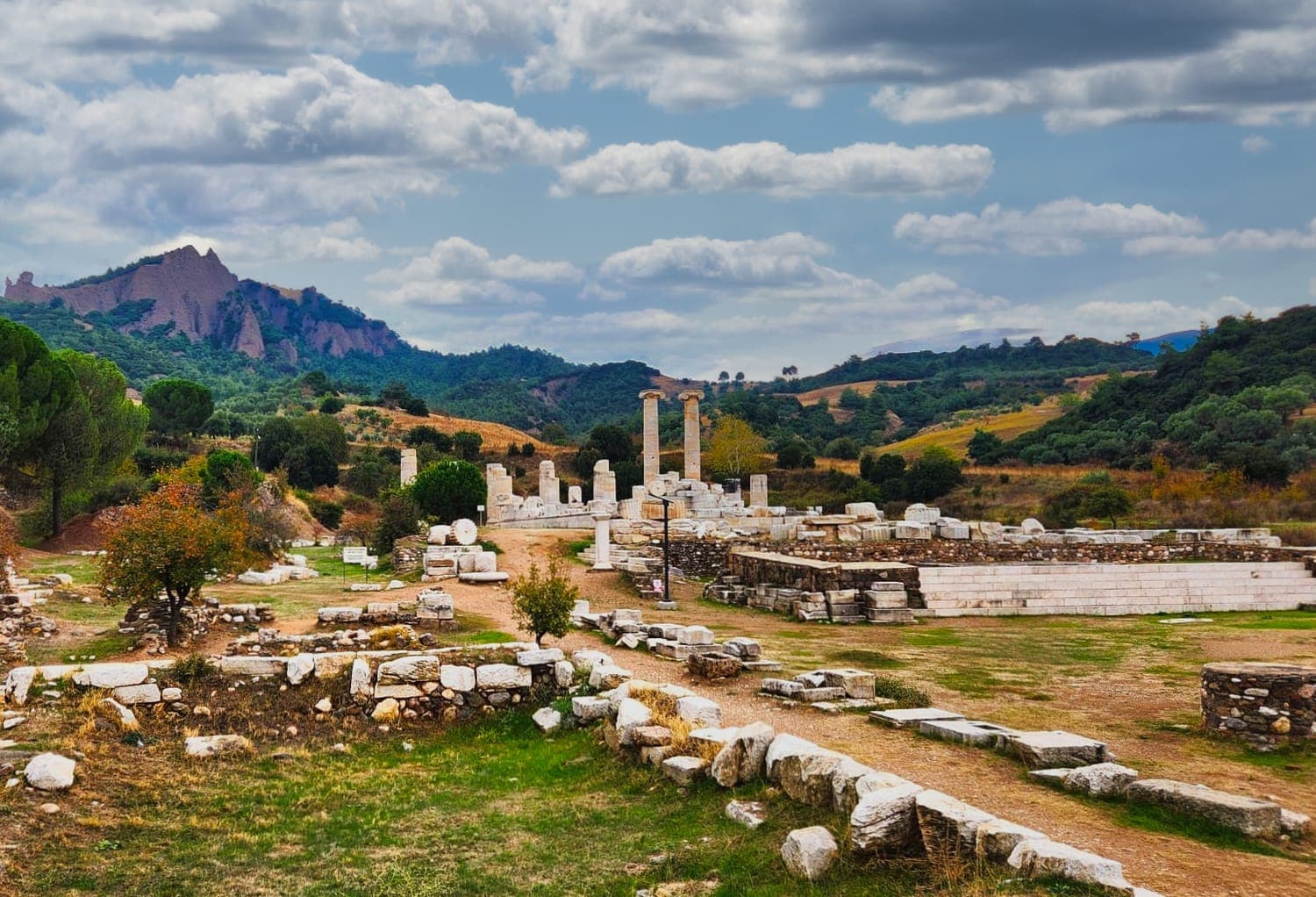
Urla’s relationship with wine is nothing new. At Klazomenai, the ancient Ionian city in the region, one of the world’s oldest and best-preserved wineries — dating to the 6th century BC — was brought to light. The grape-pressing platforms, ageing pithoi, and amphorae used for export prove that Urla was one of the Mediterranean’s deep-rooted wine centres.
Today’s producers build upon this heritage; as you wander the wine road, you are in fact tasting the latest chapter of a 2,600-year-old story. This continuity makes Urla far more meaningful than an ordinary holiday route.
Urla Karası: a grape reborn from the ashes
The region’s signature grape, Urla Karası, had once nearly vanished. Through years of meticulous propagation of the vines surviving in scattered gardens — and through the efforts of producers, foremost among them Urla Şarapçılık — it came back to life. With its spiced, medium-bodied, and balanced structure, it is today regarded as the region’s identity grape.
Urla Karası is often mentioned alongside other native varieties such as Bornova Misketi and Foça Karası. Tasting these grapes is not merely drinking a wine; it is sharing in the story of rescuing a cultural heritage that was on the verge of disappearing.
A cluster of wineries
The route holds boutique producers that lie close to one another yet each has its own character. The region’s pioneer, Urla Şarapçılık, is the starting point with its extensive vineyards and its work on native grapes. USCA stands out with its modern architecture and ambitious blends; MMG Şarapçılık, Mozaik, and Urlice offer intimate tastings on a boutique scale.
Perdix, Çakır, HUS, İkidenizarası, and Statera, meanwhile, complete the route, each representing a different style. It isn’t possible to visit them all in one day — nor is it necessary. Generally, two or three wineries, conversation with the producer, and the right pace strike the ideal balance for a day.
Tasting etiquette: an unhurried ritual
A good tasting unfolds in three stages: first you hold the glass to the light to assess the colour and clarity, then you swirl it and smell the aroma, and finally, with a small sip, you weigh the structure and length on the palate. Tasting is not drinking; small sips, using a spittoon if needed, and drinking water in between are perfectly normal.
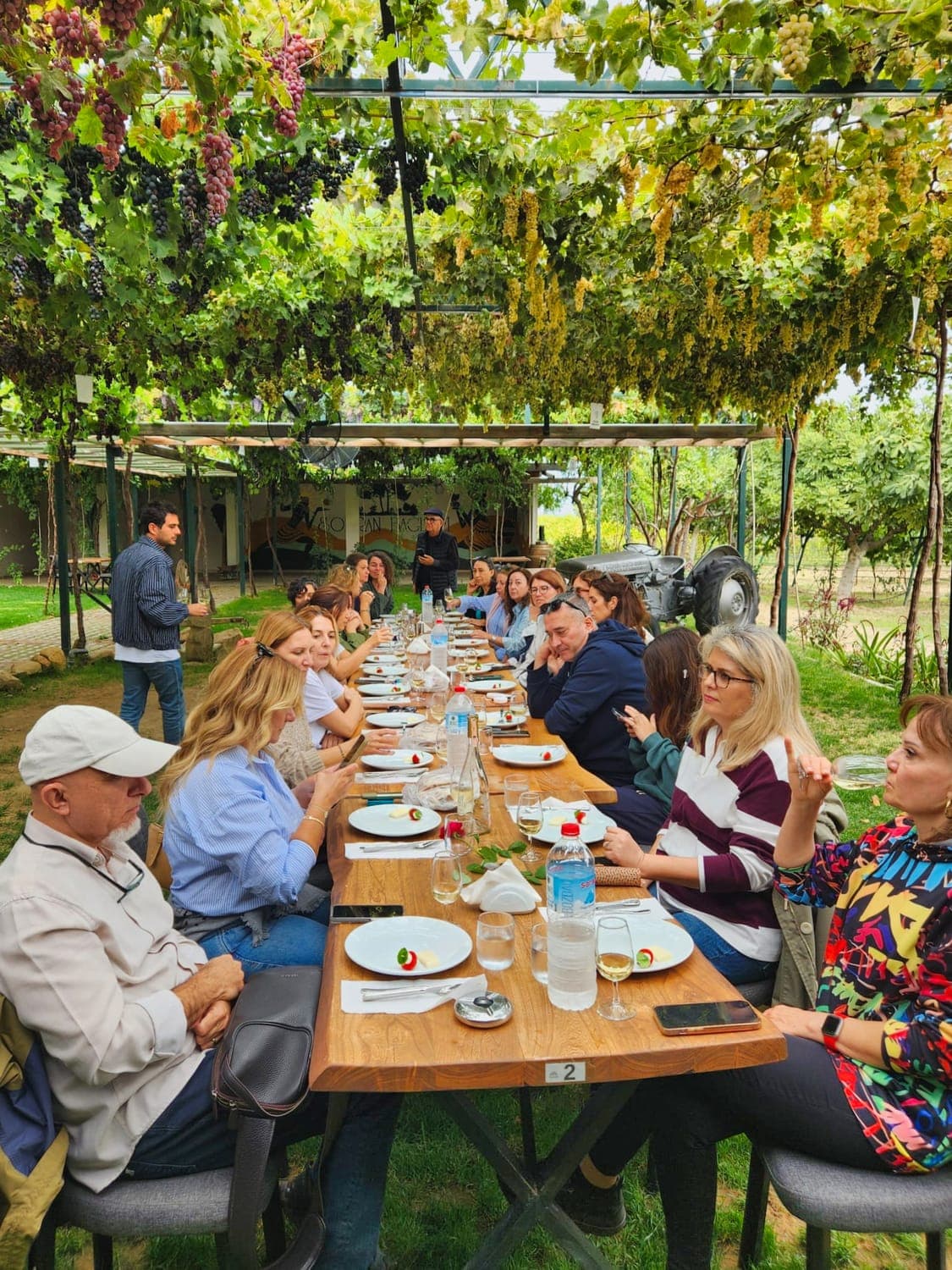
At small producers, you often sit at the same table as the person who made the wine; hearing first-hand about the harvest year, the soil, and the barrel choice is the most valuable part of the tasting. Avoiding heavy perfume and scent is part of respect both for your own palate and for the other guests at the table.
When should you go?
The vineyards’ most magnificent period is the grape harvest between September and October; the clusters are full, the vines are green, and the energy runs high, with most producers offering a harvest experience during this time. Spring (April–June) is another favourite period, with budding vines, mild weather, and quieter tasting tables.
Midsummer can be hot and crowded; winter, meanwhile, is a calm yet atmospheric period when many boutique producers operate by appointment. Whatever the season, if you plan to taste, leave the driving to us — with a private chauffeured car, you’ll explore both safely and in comfort.